
Pain in the lower back or pelvis is often caused by irritation of the sacroiliac joint, commonly known as the SI joint. These joints connect the spine to the pelvis and play an important role in transferring weight and force between the upper body and the legs.
When the joint becomes irritated or unstable, it can lead to sacroiliac joint pain, stiffness, and reduced mobility. Many patients experiencing SI joint pain in Langley report discomfort in the lower back, buttocks, or pelvis that worsens when standing, walking, or sitting for extended periods.
At Realign Chiro Physio & Rehab, we provide comprehensive SI joint pain treatment in Langley focused on identifying the root cause of pain and restoring normal movement. As a trusted back pain clinic in Langley, our team combines chiropractic care, physiotherapy, and rehabilitation exercises to help patients recover safely.
Many people seek care when looking for the best treatment for SI joint pain, especially when symptoms begin interfering with daily activities or exercise.
Ignoring SI joint dysfunction can allow symptoms to worsen over time and lead to persistent spinal or pelvic problems.
✔ Same-day appointments available
✔ Direct billing for most insurance plans
✔ Experienced chiropractors and physiotherapists
✔ Personalized rehabilitation programs
Early treatment can significantly improve SI joint pain relief and prevent chronic back pain or pelvic instability.
The sacroiliac joints are located where the sacrum at the base of the spine meets the pelvic bones. These joints help absorb shock and stabilize the body during movement.
When the joint becomes irritated or moves abnormally, it can result in SI joint dysfunction or sacroiliac joint dysfunction.
Conditions affecting the SI joint may include:
• inflammation within the joint
• ligament strain
• abnormal joint movement
• degenerative changes in the pelvis
This irritation may also contribute to SI joint lower back pain and stiffness in the pelvic region.
Symptoms of SI joint dysfunction can vary depending on the severity of the irritation and the stability of the joint.
Common SI joint pain symptoms include:
• pain in the lower back or buttocks
• discomfort on one side of the pelvis
• pain when standing from a seated position
• stiffness in the lower back
• pain when walking or climbing stairs
Many patients experiencing lower back pain SI joint symptoms also notice discomfort when sitting for long periods or bending forward.
Several factors can contribute to irritation or instability in the sacroiliac joint.
Common causes of sacroiliac joint pain include:
• traumatic injuries or falls
• repetitive lifting or bending
• muscle imbalances around the pelvis
• arthritis affecting the joint
• abnormal movement patterns in the spine
Because the joint helps stabilize the pelvis, irritation may also lead to pelvic joint pain and difficulty performing everyday movements.
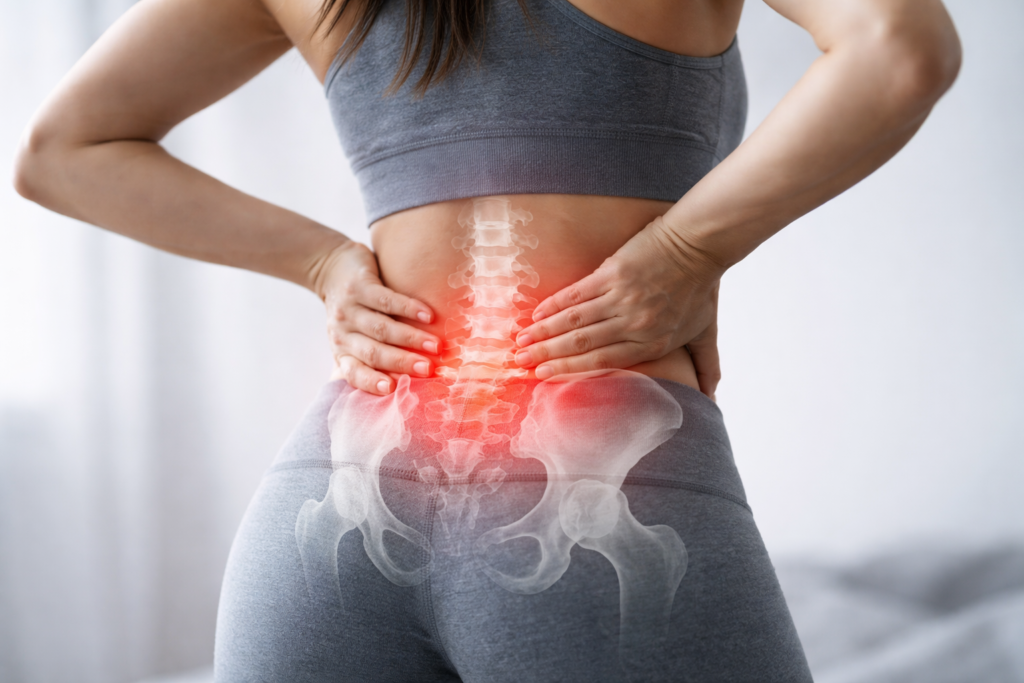
Certain lifestyle and health factors increase the likelihood of developing SI joint inflammation or sacroiliac joint instability.
Common risk factors include:
• prolonged sitting
• poor posture
• weak core muscles
• previous lower back injuries
• repetitive lifting
These factors can place additional stress on the lumbar spine, which may worsen sacroiliac joint irritation.
Hormonal changes during pregnancy can loosen the ligaments that stabilize the pelvis. This increased joint mobility may lead to SI joint pain during pregnancy and pelvic instability.
Pregnant patients may experience:
• pain when walking or standing
• discomfort when turning in bed
• increased lower back pain
• pelvic pressure or instability
Targeted rehabilitation and SI joint pain physiotherapy can help stabilize the pelvis and improve comfort during pregnancy.
Hormonal changes during pregnancy can loosen pelvic ligaments and lead to SI joint pain.
Diagnosing SI joint dysfunction requires a detailed physical assessment.
During your appointment, practitioners may evaluate:
• spinal movement
• pelvic alignment
• muscle strength and flexibility
• areas of joint tenderness
These clinical tests help determine whether symptoms are caused by sacroiliitis, sacroiliac joint dysfunction, or another spinal condition.
Accurate diagnosis is essential for choosing the most effective SI joint pain treatment in Langley.
Treatment focuses on reducing inflammation, restoring joint mobility, and improving pelvic stability.
Chiropractic adjustments can restore proper joint movement and improve spinal alignment.
Patients searching for a SI joint chiropractor in Langley often benefit from targeted adjustments that reduce pressure on the sacroiliac joint. This form of chiropractic treatment for SI joint dysfunction can help reduce pain and improve mobility.
Physiotherapy focuses on strengthening the muscles that support the pelvis and spine.
Patients looking for SI joint physio in Langley often benefit from rehabilitation exercises designed to stabilize the pelvis and improve movement patterns.
A structured SI joint pain physiotherapy program may include strengthening, stretching, and posture correction strategies.
Exercise therapy plays a major role in long-term recovery.
Common SI joint exercises include:
• glute strengthening exercises
• pelvic stabilization exercises
• core strengthening exercises
• hip mobility exercises
Strengthening these muscle groups improves pelvic stability and helps reduce SI joint pain relief over time.
Some patients develop persistent symptoms requiring long-term management strategies.
Treatment plans for chronic SI joint pain may include:
• physiotherapy rehabilitation
• chiropractic adjustments
• strengthening exercises
• posture correction strategies
Addressing underlying movement dysfunction can significantly reduce long-term sacroiliac joint pain.
SI joint pain and sciatica can feel similar, but they are different conditions.
Several strategies can help manage mild SI joint irritation between treatments.
Helpful self-care strategies include:
• applying heat or ice
• avoiding prolonged sitting
• maintaining proper posture
• performing gentle stretching exercises
Combining self-care with professional treatment can greatly improve SI joint pain relief.
Preventing sacroiliac joint dysfunction often involves improving posture and strengthening muscles that support the pelvis.
Helpful strategies include:
• strengthening core muscles
• maintaining proper lifting technique
• staying physically active
• stretching regularly
These strategies can reduce the likelihood of developing SI joint pain in the future.
Choosing the right clinic can make a major difference in recovery outcomes.
Patients choose Realign because we provide:
• multidisciplinary treatment
• experienced practitioners
• personalized rehabilitation programs
• modern treatment techniques
Our clinic acts as a trusted back pain specialist in Langley, helping patients recover from spinal and pelvic conditions.
Our clinic provides SI joint pain treatment in Langley for patients across surrounding communities.
• Willoughby
• Walnut Grove
• Fort Langley
• Brookswood
• Murrayville
• Clayton Heights
• Cloverdale
• Surrey
If you are experiencing persistent sacroiliac joint pain, early treatment can prevent worsening symptoms and help restore normal movement.
At Realign Chiro Physio & Rehab, our team provides comprehensive SI joint pain treatment in Langley using chiropractic care, physiotherapy, and rehabilitation programs designed to address the underlying cause of pain.
Whether your symptoms are caused by SI joint dysfunction, pelvic instability, or lower back irritation, our practitioners will develop a personalized treatment plan to help you recover safely.
Book an appointment today and start your recovery with professional care designed to provide lasting SI joint pain relief.