Piriformis syndrome is a common cause of buttock pain, hip pain, and sciatic nerve pain that can travel down the leg, especially with sitting, driving, or walking. If you are looking for piriformis syndrome treatment in Langley, our team at Realign Chiro Physio & Rehab provides chiropractic, physiotherapy, massage therapy, shockwave therapy, and exercise rehabilitation to reduce pain, relieve pressure on the sciatic nerve, and restore normal hip movement. Many patients with piriformis syndrome improve quickly with the right treatment and piriformis syndrome exercises designed to reduce muscle tension and improve hip mobility.
Piriformis syndrome is often mistaken for sciatica or a disc injury, which is why a proper assessment is important to determine the exact cause of your sciatic nerve pain. More recovery options is available in our hip treatment guide.
Book your piriformis syndrome treatment in Langley at Realign Chiro Physio & Rehab today. Same-day appointments and direct billing available.
Piriformis syndrome symptoms may include:
Piriformis syndrome pain is usually felt deep in the buttock and may cause pain down the leg similar to sciatica.
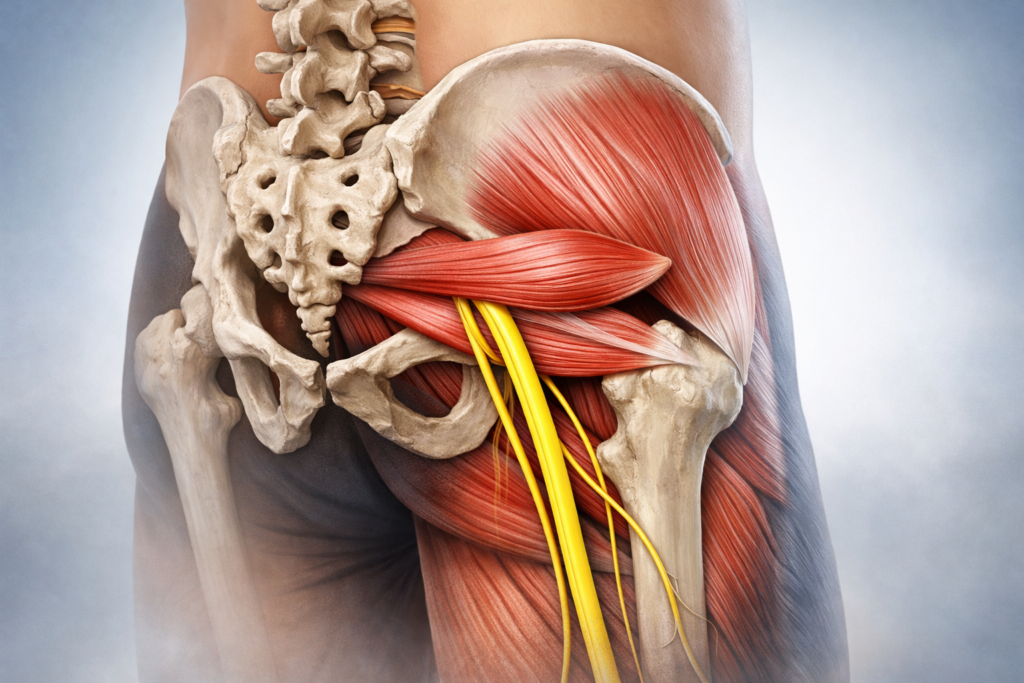
Piriformis syndrome occurs when the piriformis muscle compresses or irritates the sciatic nerve, causing buttock pain and sciatic nerve pain down the leg. The piriformis muscle is a small muscle located deep in the glute that helps rotate and stabilize the hip. When this muscle becomes tight, inflamed, or overworked, it can irritate the sciatic nerve and cause pain
Common causes include:
Weak glutes and poor hip stability are one of the most common causes of piriformis syndrome.
At Realign Chiro Physio & Rehab, piriformis syndrome is diagnosed through:
Proper diagnosis is important because piriformis syndrome is often confused with sciatica, disc herniation, or lower back pain.

Piriformis Syndrome Treatment Options
| Treatment | How It Helps |
|---|---|
| Chiropractic | Improves lower back and hip movement |
| Physiotherapy | Strengthens hip and glute muscles |
| Massage Therapy | Relieves piriformis muscle tension |
| Shockwave Therapy | Helps chronic piriformis pain |
| Piriformis syndrome exercises | Reduces pressure on sciatic nerve |
| Stretching | Improves hip mobility |
| Exercise Rehab | Prevents recurrence |
The goal of piriformis syndrome treatment is to reduce muscle tension, relieve sciatic nerve irritation, and restore normal hip movement.
Chiropractic treatment for piriformis syndrome focuses on improving movement in the lower back, pelvis, and hip. Many patients with piriformis syndrome also have lower back stiffness or SI joint dysfunction, which can contribute to sciatic nerve irritation.
Chiropractic adjustments combined with physiotherapy and massage therapy can help reduce piriformis syndrome pain.
Physiotherapy for piriformis syndrome focuses on:
Weak glutes are one of the main causes of piriformis syndrome.
Massage therapy helps:
Massage therapy is very effective for piriformis syndrome treatment.
Piriformis Syndrome Exercises
| Exercise | Benefit |
|---|---|
| Piriformis stretch | Reduces muscle tension |
| Figure 4 stretch | Improves hip mobility |
| Glute bridges | Glute strength |
| Clamshells | Hip stability |
| Side steps | Glute strength |
| Foam rolling | Releases piriformis |
| Hip mobility exercises | Improves movement |
Piriformis syndrome exercises are important to prevent the pain from returning.
Piriformis syndrome pain is commonly worse with:
Buttock pain when sitting is one of the most common piriformis syndrome symptoms.
| Piriformis Syndrome | Sciatica |
|---|---|
| Buttock pain | Lower back pain |
| Pain when sitting | Pain when bending |
| Glute pain | Leg pain from back |
| Muscle problem | Disc problem |
| Local nerve compression | Nerve root compression |
Recovery depends on how long the problem has been present:
| Severity | Recovery Time |
|---|---|
| Mild | 2–4 weeks |
| Moderate | 4–8 weeks |
| Chronic | 2–3 months |
Treatment helps speed up recovery and prevent the problem from coming back.
You can prevent piriformis syndrome by:
You should seek piriformis syndrome treatment if:
Piriformis syndrome is commonly associated with:
Realign Chiro Physio & Rehab provides piriformis syndrome treatment in Langley, Willowbrook, Clayton Heights, Cloverdale, Walnut Grove, Fort Langley, Murrayville, Brookswood, and Surrey.
If you are looking for piriformis syndrome treatment in Langley, treatment for sciatic nerve pain, buttock pain treatment, or hip pain treatment in Langley, our team at Realign Chiro Physio & Rehab can help reduce pain and get you back to normal activities.
Same-day appointments available. Direct billing available. Book online today.